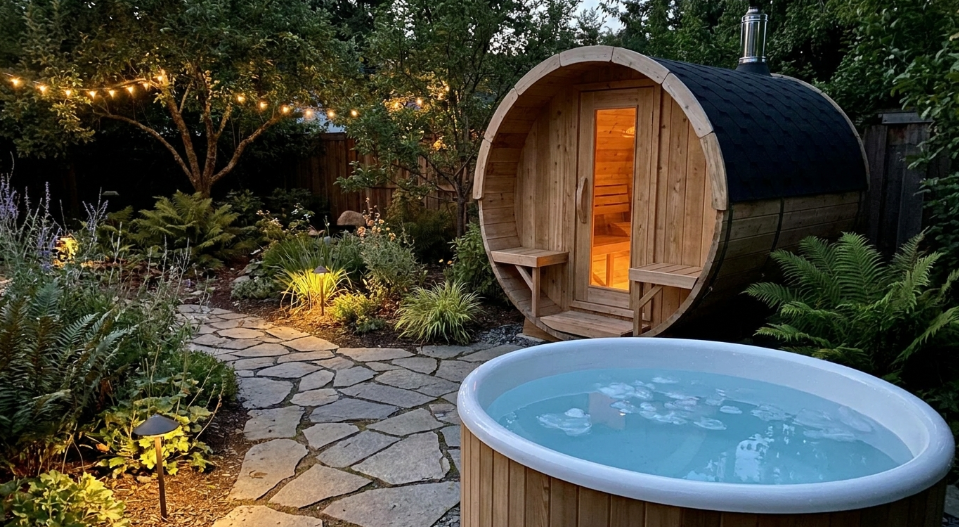
A sauna heater earns its keep most in winter, when the temperature swing between a snowy yard and a 170 to 190 degree cabin is the whole point, and when the low humidity of cold outdoor air makes the dry heat feel more intense than the same heater delivers in July. Electric units still reach target temperature in a normal 30 to 45 minute window in cold weather if the cabin is properly insulated. The main tradeoff is a modestly higher electric bill, typically another $15 to $30 a month for a few sessions a week, against a summer sauna habit that a lot of owners let slide once the weather turns hot anyway.
Why Does a Sauna Feel More Intense in Winter?
Winter air holds less moisture than summer air, and that dryness carries into the sauna room itself, making a 180 degree session feel sharper and drier than the same temperature reading on a humid August evening. The contrast effect matters too: stepping from 20 degree outdoor air into a hot cabin, then back out again, is a bigger physiological jolt than moving between a warm house and a warm sauna in summer, which is part of why so many longtime users describe winter as the season the habit actually sticks. None of this changes what the heater itself has to do mechanically, but it does change how the same heat feels once you’re sitting in it.
Electric Versus Wood Heaters When It’s Actually Cold Out
An electric heater’s biggest winter advantage is that starting a session doesn’t require standing outside in the cold splitting or hauling wood first. Punch in a delay-start timer from inside the house and the cabin is at temperature by the time anyone walks out. A wood-burning heater still works fine in freezing weather and plenty of owners prefer the heat it produces, but the full routine, building the fire, feeding it for 45 minutes to an hour, and cleaning out ash afterward, takes noticeably longer when everything outside is covered in snow. Households who use their sauna two or three times a week through the winter tend to gravitate toward electric for exactly this reason, while occasional weekend users often don’t mind the wood routine either way.
What Changes About Running Costs Between Summer and Winter?
An outdoor cabin loses heat faster to a 20 degree night than to a 70 degree evening, so the heater cycles on more often to hold temperature during a session, which shows up as a modest bump in the electric bill. For a typical 6 kilowatt heater run three to four times a week, that usually lands in the $15 to $30 a month range above baseline, though poorly insulated cabins or heaters sized too small for the room run higher. This is one more reason sizing the heater correctly at purchase matters: a unit that’s already working near its limit in mild weather struggles more once temperatures drop, and struggles longer, which is where the real cost creeps in.
What Should You Check Before Winter Hits?
Before the first hard freeze, confirm the water bucket or any plumbed water line for the sauna is set up to drain or be brought inside between uses, since standing water in an unheated space can freeze and crack a container or fitting. Check the door seal and any vent gaskets for gaps that let cold drafts in around the heater, since a leaky cabin forces the unit to run longer per session. If you’re shopping for a heater specifically to handle a real winter routine rather than a mild-climate one, retailers like Sweat Decks list outdoor-rated models with their cold-weather clearance and wiring notes, which is worth checking against your specific climate before buying rather than after the first freeze.
How Does a Winter Sauna Habit Compare to a Hot Tub?
Both are winter rituals, but they solve a different problem. A hot tub tops out around 104 degrees Fahrenheit, closer to a warm bath than a heat session, and it stays at that temperature continuously, drawing power around the clock to hold it rather than cycling on only when someone plans to use it. A sauna heater runs cold between sessions and only draws real power for the 30 to 45 minutes it takes to reach 170 to 190 degrees, which for most winter usage patterns, a few sessions a week rather than daily soaking, ends up cheaper to operate over a season. A hot tub also needs ongoing chemical maintenance to keep standing water sanitized through the winter, while a sauna heater has no water to maintain between uses beyond what gets poured on the stones during a session. Neither replaces the other experience, but for anyone weighing the two purely as a winter routine, the sauna’s on-demand heating cycle is the more efficient one to run through a cold season.
What Do Sauna Studies Say About Cold and Heat Exposure Together?
A 2018 paper in the American Journal of Physiology looked specifically at the physiological effects of heat and cold exposure, with particular attention to Finnish sauna bathing patterns that pair hot sessions with cold outdoor air or snow. A broader 2018 review in Mayo Clinic Proceedings covered cardiovascular associations tied to regular sauna use across multiple studies, and a systematic review in Evidence-Based Complementary and Alternative Medicine reached similar conclusions about consistent sauna habits. These are association studies built on cohort data, not controlled proof that alternating hot and cold produces a specific health outcome for any individual, and the usual cautions apply for anyone managing a cardiovascular condition.
Frequently Asked Questions
Does cold weather make a sauna heater work harder? A properly sized heater in an insulated cabin still reaches temperature in a normal 30 to 45 minute window during winter, though an uninsulated outdoor unit in freezing air can take longer and cost more per session.
Is an electric or wood heater better for winter use? Electric heaters are more convenient for frequent winter sessions since they start with a button. Wood heaters work fine in winter but the prep routine takes longer in the cold.
How much does it cost to run a sauna heater through a winter? A 6 kilowatt electric heater run several times a week typically adds $15 to $30 a month to a power bill, with colder climates trending toward the higher end.
Can a sauna heater run in freezing temperatures outdoors? Yes, most residential heaters are rated for outdoor cabin use in freezing conditions, but water lines and exposed wiring need winterizing.
References
- “Effects of heat and cold on health, with special reference to Finnish sauna bathing.” American Journal of Physiology – Regulatory, Integrative and Comparative Physiology, 2018. https://pubmed.ncbi.nlm.nih.gov/29351426/
- “Cardiovascular and Other Health Benefits of Sauna Bathing: A Review of the Evidence.” Mayo Clinic Proceedings, 2018. https://pubmed.ncbi.nlm.nih.gov/30077204/
- “Clinical Effects of Regular Dry Sauna Bathing: A Systematic Review.” Evidence-Based Complementary and Alternative Medicine, 2018. https://pubmed.ncbi.nlm.nih.gov/29849692/